How 3D Printing Sustains Tooling and Pattern Advancement in Light Weight Aluminum Foundries

Benefits of 3D Printing in Tooling and Pattern Growth
As 3D printing innovation proceeds to evolve, it supplies significant benefits in tooling and pattern development for aluminum factories. Among the key advantages is the reduction in preparations. Conventional tooling approaches typically call for substantial machining and manual work, which can postpone production routines. On the other hand, 3D printing allows for rapid prototyping, enabling foundries to create patterns and molds promptly.
Moreover, 3D printing lessens product waste. Foundry. Traditional techniques usually involve cutting away excess product, whereas additive manufacturing develops elements layer by layer, maximizing product use. This effectiveness not only decreases prices yet likewise sustains sustainability initiatives within the market
In addition, the capacity to develop elaborate designs boosts the overall top quality of spreadings. With 3D printing, factories can create intricate geometries that were previously difficult or difficult to accomplish with traditional strategies, bring about boosted product efficiency and technology in design.
Enhanced Layout Flexibility and Complexity
The integration of 3D printing modern technology in aluminum foundries greatly improves design flexibility and complexity. Traditional manufacturing methods usually enforce restrictions on geometric intricacies and style variants. In contrast, 3D printing permits for the creation of detailed layouts that were formerly unattainable, making it possible for developers and engineers to introduce without the constraints of traditional tooling processes. Complex internal frameworks, latticework styles, and personalized functions can currently be conveniently generated, considerably widening the range of design possibilities.
This innovation helps with the quick model of designs, allowing for modifications and improvements to be made promptly in reaction to testing and responses. Therefore, foundries can much better satisfy certain consumer requirements and adapt to market needs. The boosted layout flexibility not just promotes creative thinking yet also adds to the growth of more reliable and enhanced parts, ultimately boosting total item high quality and performance in aluminum spreading applications.
Quick Prototyping and Manufacturing Effectiveness
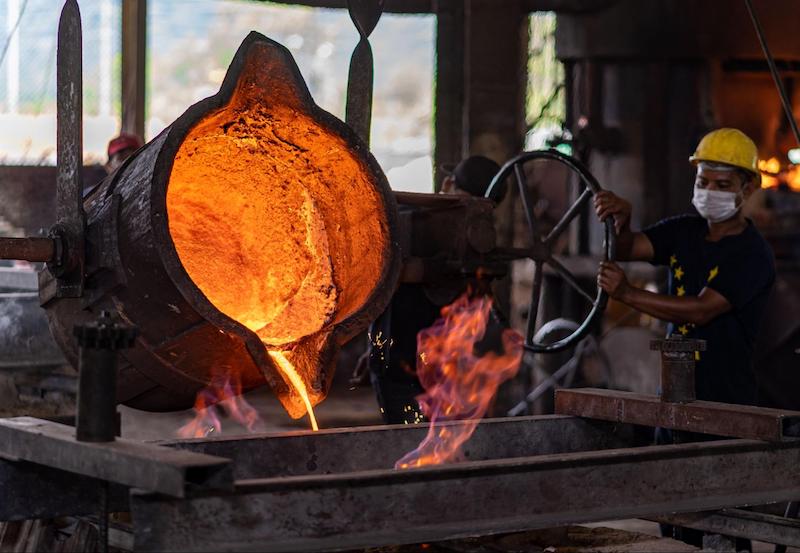
3D printing facilitates the manufacturing of complex geometries that were impossible or formerly difficult to achieve with conventional methods. As an outcome, aluminum shops can produce light-weight yet robust components that satisfy certain efficiency requirements. The capability to rapidly create models likewise aids in identifying prospective design imperfections early, bring about boosted item top quality. Overall, quick prototyping via 3D printing placements light weight aluminum factories to react quickly to market demands, thus boosting operational effectiveness and competition.
Cost-Effectiveness and Product Savings
Achieving cost-effectiveness is a considerable benefit of incorporating 3D printing innovation in aluminum foundries. The additive manufacturing procedure permits the manufacturing of complex geometries that typical approaches might locate pricey or challenging to replicate. This ability causes the decrease of material waste, as components are constructed layer by layer, making use of just the necessary quantity of material for each part.
Furthermore, 3D printing lowers the demand for substantial tooling and machining, which can be costly and taxing. By lessening these requirements, shops can reduce their total manufacturing expenses while boosting throughput. The capability to quickly iterate styles additionally implies that shops can reply to market needs extra efficiently, more boosting financial efficiency. The potential for on-demand production removes the need for huge stock supplies, allowing for enhanced cash flow management. In general, 3D printing supplies a critical advantage in accomplishing expense savings and source performance in aluminum shops.
Instance Studies: Effective Applications in Light Weight Aluminum Foundries
As aluminum factories significantly adopt 3D printing innovation, countless study highlight its transformative effect on production procedures. One significant example why not find out more entails a mid-sized factory that carried out 3D-printed sand mold and mildews, minimizing preparations by 50%. This accelerated their production abilities while reducing material waste. Another study highlights a large-scale procedure that changed standard tooling with 3D-printed patterns for complex components. This change not only decreased expenses but likewise improved the accuracy of their castings.
Additionally, a startup foundry made use of 3D printing to create personalized tooling, boosting flexibility and permitting quick design modifications. This adaptability allowed them to reply to market demands swiftly. Collectively, these executions demonstrate how 3D printing cultivates price, performance, and development financial savings in light weight aluminum shops, leading the try this website way for future advancements in the market.

Often Asked Questions
What Kinds of Materials Are Made Use Of in 3D Printing for Aluminum Foundries?
Different products are made use of in 3D printing for aluminum foundries, consisting of thermoplastics like abdominal muscle and PLA, in addition to metal powders such as light weight aluminum and stainless-steel, which enhance longevity and accuracy in tooling and pattern advancement.
Exactly How Does 3D Printing Effect Standard Manufacturing Techniques in Shops?
3D printing boosts standard manufacturing techniques in foundries by boosting style flexibility, lowering preparations, and lessening material waste. This innovative strategy permits fast prototyping, making it possible for quicker models and improved effectiveness in production processes.
What Are the Usual Obstacles Faced When Applying 3D Printing in Foundries?
Usual challenges faced when executing 3D printing in shops consist of high initial prices, material restrictions, combination with existing procedures, training workforce on brand-new modern technologies, and making sure quality assurance throughout manufacturing to fulfill industry requirements.
Can 3D Printing Be Made Use Of for Repair And Maintenance in Aluminum Foundries?
Yes, 3D printing can be efficiently made use of for repair and maintenance in aluminum factories, allowing rapid production of extra components and components. This advancement decreases downtime and improves functional performance, eventually profiting general performance and cost-effectiveness.
Just How Does 3D Printing Affect the Environmental Sustainability of Foundries?
3D printing improves ecological sustainability in foundries by lowering product waste, allowing reliable manufacturing processes, and decreasing power usage (Aluminum Casting). Its capability to create complicated geometries also advertises lightweight layouts, further decreasing the ecological footprint of production
The combination of 3D printing modern technology in light weight aluminum foundries substantially enhances layout adaptability and intricacy. Rapid prototyping has actually emerged as a pivotal benefit of 3D printing in light weight visit this page aluminum shops, substantially improving production effectiveness. As aluminum shops progressively take on 3D printing modern technology, countless instance research studies highlight its transformative impact on production procedures. 3D printing boosts traditional production approaches in foundries by increasing style versatility, reducing lead times, and decreasing material waste. Yes, 3D printing can be successfully made use of for upkeep and repair work in light weight aluminum shops, enabling quick manufacturing of spare parts and components.